The meat industry is evolving rapidly, with automation transforming how animals are processed, monitored, and handled. Modern automated abattoirs deliver higher standards of quality, consistency, and food safety than traditional processing methods.
An automated abattoir uses modern equipment and technology to support slaughtering, processing, packaging, and quality control operations. Automation helps improve efficiency while reducing unnecessary manual handling.
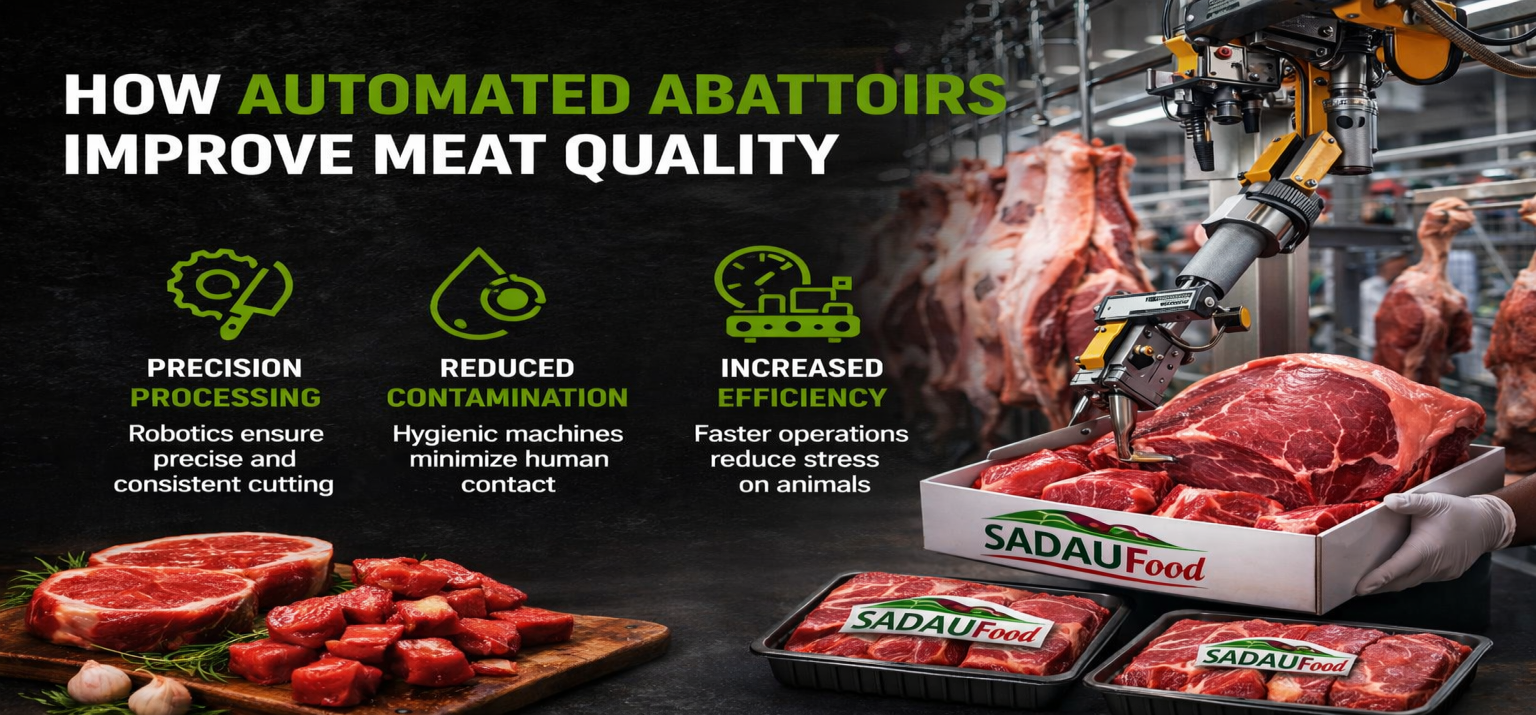
Automation ensures that processing procedures are carried out consistently. Standardized operations help maintain uniform quality across every product that leaves the facility.
One of the biggest advantages of automation is reduced human contact with products during processing. Fewer handling points help minimize contamination risks and improve overall food safety.
Automated systems allow for more precise cutting, handling, and packaging. This helps preserve the appearance, texture, and freshness of meat products while reducing waste.
Efficient equipment allows products to move through the processing chain more quickly. Faster processing supports freshness and helps maintain product quality from slaughter to delivery.
Modern facilities often use digital systems that track products throughout the production process. This improves accountability, quality monitoring, and supply chain transparency.
Today's consumers expect high standards of quality and safety. Automated facilities provide the consistency and reliability necessary to meet those expectations.